
Meknes Morocco Travel: Your Ultimate Guide to Visiting
After a crowded day in Morocco’s busiest cities, Meknes can…
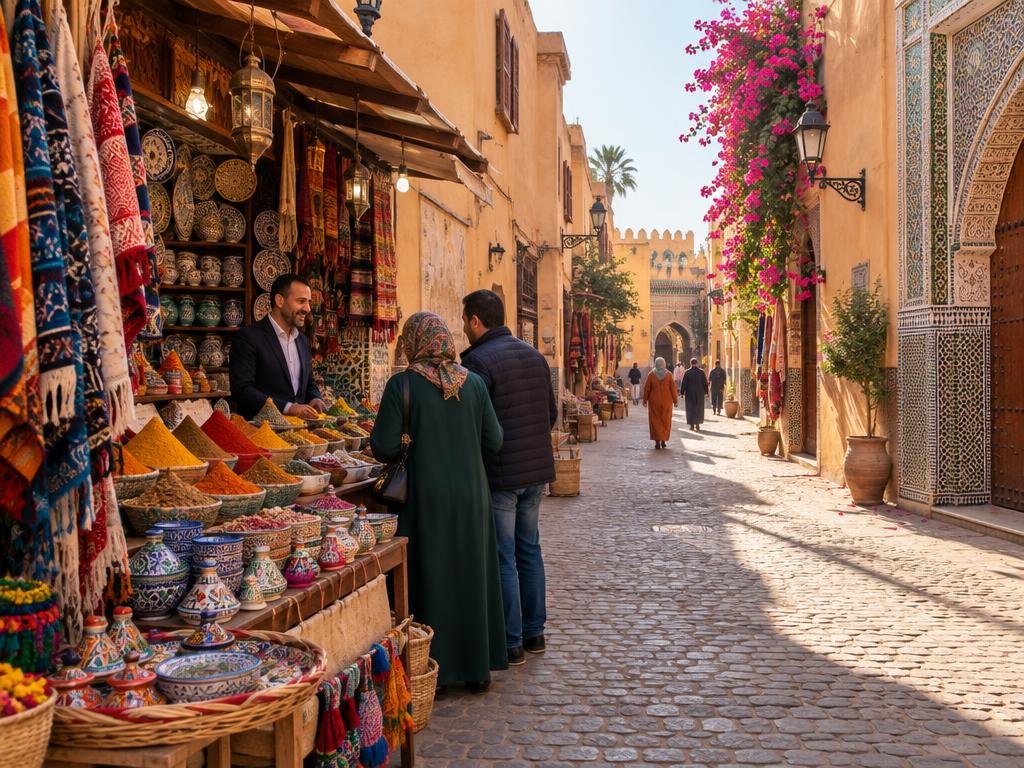
After a crowded day in Morocco’s busiest cities, Meknes can feel like a welcome change of pace. Its compact old town, historic buildings, working markets, and nearby excursions give you plenty to explore without a packed schedule.
A day visit can cover central highlights, but an overnight stay gives you more time for the medina and its evening mood. You can walk at a calmer pace, pause in the old streets, and see the city after many day visitors have left.
This guide helps you decide how long to stay, what to see, and how to shape a practical trip. You will also find ways to plan nearby outings, choose a place to sleep, and handle local travel. The key choice is simple: fit the city into a day, or give its slower rhythm more room.
Key Takeaways
- A focused day can cover the central historic sights.
- An overnight stay makes time for a slower medina visit.
- Markets and old streets show daily life beyond the monuments.
- Volubilis and Moulay Idriss Zerhoun work as a nearby day trip.
- Check local opening times and access before setting out.
What Makes Meknes Morocco Travel Worth Your Time?
Meknes suits you if you want Moroccan history without the pace of the busiest tourist centers. Its manageable old town and unhurried feel make it easier to explore without filling every hour.
A day can cover the central sights, while an overnight stay leaves room for a slower visit. That choice depends on whether you enjoy a quick overview or prefer to wander without watching the clock.
The city brings together historic architecture, everyday souks, and streets used by residents. You can see old buildings, browse local shops, and pause for a tea without feeling that every stop must be an attraction.
That everyday character is part of the appeal. Some lanes feel less polished for visitors than the famous medinas elsewhere, and the markets often focus on local needs.
The trade-off is a smaller range of tourist services and evening activities. You may find fewer guided experiences or late-night options than in larger tourist hubs.
Choose Meknes if history and a less arranged local feel matter more to you than a nonstop schedule. It is also a good fit if you want a calmer base for a nearby excursion.
A brief stop works if you focus on the center. An overnight stay gives you more time to notice the city’s pace and enjoy an evening walk. Its monuments make more sense once you know the story behind them.
How Did Moulay Ismail Shape Meknes?
Moulay Ismail made Meknes his capital and reshaped the city around his royal court. That choice left a lasting mark on its walls, gates, and large historic buildings.
An imperial city is a city that served as a royal capital and retains historic monuments and districts tied to that role. Meknes gained that status under Sultan Moulay Ismail, who ruled from 1672 to 1727.
From fortress town to royal capital
Before the royal court arrived, Meknes was a smaller fortified town. Moulay Ismail chose it as his capital in the 17th century and began building a vast royal quarter.
The change gave the city a new scale. Builders raised walls, gates, and court buildings, while the existing medina continued to serve as a center for residents and trade.
Those two parts still help you read the city. The medina holds homes, shops, and daily activity; the royal quarter reflects the needs and reach of the court.
What remains of the imperial city
Today, you can still see long walls, monumental entrances, and major structures linked to that royal project. Their size stands out beside the tighter lanes of the old town.
The historic center joined UNESCO’s World Heritage List in 1996. That recognition reflects the city’s mix of royal planning and a lived-in medina.
Meknes is not a preserved palace complex. People still live and work among its historic buildings, and access to some places can change.
Once you understand the difference between the medina and the royal quarter, the grand entrance and central square offer a clear place to begin.
What Should You See Around Place el-Hedim and Bab Mansour?
Arrive at Place el-Hedim and use the open square to get your bearings before walking onward. It is an easy meeting point between the old medina and the royal quarter.
Bab Mansour is the best-known gate in the central area, but nearby access can change. Check current conditions locally rather than assuming every landmark is open.
The square gives you room to pause and watch people cross between the surrounding streets. From here, Bab Mansour stands out for its broad face and detailed surface.
The gate was commissioned in the early 18th century and completed by Moulay Ismail’s son after the sultan died in 1727. Its position marks the meeting of the old medina and the royal quarter.
Dar Jamai Museum is close enough to include in a short walk. Smaller gates, including Bab Jemaa en Nouar, offer a quieter look at the city’s historic entrances.
You can follow a simple loop without trying to see every nearby building. Give yourself time to look closely, then head into the lanes for a different view of the city.
- Place el-Hedim, a useful starting point and gathering place.
- Bab Mansour, the prominent gate beside the square.
- Bab Jemaa en Nouar, a smaller nearby gate.
Restoration work or changing opening arrangements may affect what you can enter. Ask locally before setting out, especially if you have limited time.
After the open space and monumental entrances, carry your walk into the medina’s everyday streets and markets.
What Is Worth Exploring in the Medina?
A stall selling soap, kitchen tools, or fresh produce can tell you more about daily life than a souvenir display. The medina is still a place people use, not only a sightseeing zone.
Some market lanes sell ordinary household goods rather than visitor souvenirs. Shopping can feel less curated here than in medinas built around tourist browsing.
The souks serve residents as well as visitors. You may pass food stalls, small shops, and covered market lanes where people shop for things they need that day.
Walk without a strict route, and leave space to notice the details. Look at doorways, upper floors, and the way the architecture changes from one street to another.
Some places are busy and narrow, while other streets open into quieter corners. A shop may sell practical goods rather than crafts, so take the market on its own terms.
Be considerate as you move through the lanes. Ask before taking someone’s photo, and do not block doorways while you stop to look or take a picture.
A relaxed walk helps you see how shops and people shape the old town. From these daily streets, turn to the landmark most closely tied to Moulay Ismail.
What Can You Visit in Moulay Ismail’s Imperial Quarter?
The Mausoleum of Moulay Ismail is the most meaningful stop if you want to understand his legacy. Its religious setting and fine details set it apart from the surrounding ruins.
Non-Muslim visitors have been allowed into major parts of the mausoleum, though access rules can change. Check current entry arrangements and dress expectations before you go.
The Mausoleum of Moulay Ismail
Completed in 1703, the mausoleum is both a place of worship and a work of architecture. Its courtyard and decorated rooms offer a calmer visit than the broad spaces outside.
Dress modestly and follow any instructions given at the entrance. Rules may differ by area, so do not assume that every room is open to every visitor.
The visit also has a different feel from seeing a monument as a ruin. Give people space to pray, keep your voice low, and treat the building as an active religious site.
Heri es-Souani, the basin, and the walls
Elsewhere in the imperial quarter, you can see extensive walls and the remains of Heri es-Souani, a complex of granaries and stables. These structures help show the scale of the royal district.
The Agdal basin is a large water feature, measuring about 320 meters long, almost 150 meters wide, and 3.2 meters deep. Its size becomes clearer when you see the walls around it.
These sites are separate from the mausoleum visit and can take more walking. Restoration work or restricted access may change which parts you can see.
Check local conditions before planning a tight visit. After the royal quarter, other historic buildings and collections offer a closer look at Meknes’s architecture.
Which Museums and Historic Buildings Deserve Your Time?
A museum visit gives you time with collections, while a landmark may be best seen from the lane outside. That distinction can help you choose which sites fit your day.
Dar Jamai Museum is a strong pick if you want to see decorative arts and learn about Moroccan music. Opening arrangements can vary, so check before you plan around a specific visit.
Dar Jamai Museum and Borj Bel Kari
Dar Jamai was commissioned in 1882 and became a museum in 1920. The palace setting is part of the experience, with rooms and design that show a different side of Meknes architecture.
Its collections include Moroccan music and decorative arts. If you have only time for one museum, this place offers both an historic setting and objects to explore.
Borj Bel Kari houses a pottery museum. It gives you another way to look at local craft and the forms made from clay.
Bou Inania Madrasa and the Great Mosque
Bou Inania Madrasa is a historic school, while the Great Mosque is a major landmark in the old town. You can appreciate the mosque’s place in the streets from the surrounding lanes.
Access to religious sites may be limited, and arrangements can vary. Respect signs and local guidance rather than expecting to enter every building.
Choose a museum if you want an indoor visit and time with a collection. For a brief walk, the school and mosque add historic detail to the streets.
With the city’s sites in view, you can turn to the archaeological and pilgrimage destinations nearby.
How Can You Visit Volubilis and Moulay Idriss Zerhoun?
You can pair Volubilis with Moulay Idriss Zerhoun on a day trip, but travel between the two is the key decision. Planning the ride matters more than the distance between stops.
Volubilis is about 30 kilometers from Meknes, and Moulay Idriss Zerhoun is about 5 kilometers from Volubilis. The Roman ruins and pilgrimage town are commonly visited together.
Choose between a private ride and a guided tour
A private driver or taxi gives you more control over how long you stay at each place. Agree on the route and return plan before leaving, since travel needs can differ.
An organized tour can simplify the day by arranging transport and a set schedule. It may suit you if you would rather leave the driving and timing to someone else.
Public transport and shared rides may cost less, but they can take more planning. They may not suit a tight schedule, especially if you need to connect both stops and return to Meknes.
- Private driver: flexible timing and a planned route.
- Taxi: direct transport, with terms agreed before departure.
- Organized tour: transport and timing arranged as a package.
- Public transport: more planning for connections and return travel.
Plan the stops in a sensible order
Many visitors start at Volubilis, then continue to Moulay Idriss Zerhoun. The short distance makes that order practical, though your driver or tour may set another route.
Check site hours and transport arrangements before departure. Keep time for walking at the ruins and for the town’s steep streets.
Do not assume a taxi will be waiting when you finish. Set a clear pickup plan, especially if you are not traveling with an organized tour.
Use these choices to decide whether Meknes works best as a brief stop or a slower overnight stay.
How Should You Plan One or Two Days in Meknes?
If you arrive with one full day, focus on the historic center and choose one major indoor or religious visit. A clear limit keeps the day enjoyable instead of turning it into a race.
Do not try to fit every city sight and both excursion destinations into one rushed day. Volubilis and Moulay Idriss Zerhoun need time for the ride and the stops themselves.
A focused day in the historic center
Start near Place el-Hedim and walk to Bab Mansour while the center is fresh. Continue into the medina, allowing time to browse streets rather than counting every shop as a stop.
Choose either a museum or the mausoleum for your main visit. Trying to add both can leave too little time for the old town or a proper pause for a meal.
A day trip to Volubilis can fit instead of a full city visit. You might see a little of central Meknes before or after, but the city and ruins deserve separate time.
An overnight stay for a slower visit
A second day gives you room for the imperial quarter, a slower meal, or an excursion to Volubilis and Moulay Idriss Zerhoun. Pick one main focus rather than treating every option as essential.
An overnight stay also lets you return to the medina at a different pace. You can leave a quiet hour for a café or an evening walk instead of rushing back to transport.
- Morning: begin at Place el-Hedim and see Bab Mansour.
- Afternoon: walk through the medina, then visit one museum or the mausoleum.
- Evening: take a relaxed walk and sit down for a meal.
Keep some time open in the schedule. A visit can take longer if a site is closed, access changes, or you want to stop along the way.
Once you have chosen a pace, the transport details can make arrival and local movement easier.
How Do You Get to and Around Meknes?
Rail is a straightforward choice from Fez, and a local taxi can help after you arrive with bags. Plan that last ride because the station is outside the old medina.
The train from Fez takes about 1 hour 15 minutes, while a coach from Casablanca takes about 3 hours. Train and coach links connect Meknes with major Moroccan cities.

From the station, a taxi can take you and your luggage toward the old town. A vehicle may not reach every narrow lane, so ask where the driver can leave you if your lodging sits deep inside the medina.
Once you are settled, the central old town is best explored on foot. Walking lets you move through the small streets at your own pace.
Taxis help with longer rides between the center and the imperial quarter. They are also useful when heat, distance, or luggage makes walking less comfortable.
If a taxi driver does not use a meter, agree on the fare before the ride begins. Confirm the destination, too, so you both understand where you are going.
- Train: a practical option from Fez and other connected cities.
- Coach: useful for trips between major cities.
- Taxi: handy for luggage and longer rides across town.
Choosing a base near the places you plan to visit can reduce unnecessary rides and make your stay easier.
Where Should You Stay in Meknes?
Stay in or near the medina if you want to walk to historic sights, or choose the newer part of town for modern services and easier vehicle access. Your daily routine is the best guide.
A medina stay favors walking and atmosphere, while a newer-town hotel favors convenience by car. Both can work, depending on how you plan to spend your time.
A riad-style stay usually centers on an interior courtyard and rooms within a traditional building. A conventional hotel often offers a more familiar layout and may be easier to reach by vehicle.
Inside the medina, narrow lanes can make the final walk with bags less simple. Check recent access instructions and ask where a taxi can drop you off.
Before booking, confirm what the room rate includes. Breakfast, taxes, and other services may be listed separately, so read the terms for the room you choose.
Accommodation prices depend on season, location, and room type. Compare the details that matter to you, such as a private bathroom, air conditioning, or help with luggage.
For one night, proximity to your main sights may matter most. For a longer stay, weigh that against easy access to transport and modern services.
After choosing a place to sleep, you can plan meals and evenings around the kind of neighborhood you prefer.
What Should You Eat and Do in the Evening?
Choose an old-town meal for a traditional setting, or head to a modern café in the newer part of town. Either can suit the evening, depending on the mood and menu you want.
Look for Moroccan staples such as tagine, couscous, grilled dishes, and mint tea. Check menus and opening times in person rather than assuming a restaurant is open.
Food choices can vary by neighborhood and day. If you have a particular dish in mind, ask what the kitchen is serving before you settle in.
Place el-Hedim is an option for an evening stroll after dinner. Rooftop seating can give you a view across the square while you pause for tea or a meal.
The newer part of town has more modern cafés and restaurants. It may be a good choice if you want a familiar setting or a wider range of dining styles.
Leave room to adjust your plans if a restaurant is closed or busy. Carry the same flexible approach into your timing and other practical choices.
What Practical Tips Will Make Your Visit Easier?
A Friday visit can affect your plan if a shop or restaurant closes or cuts its hours. Build in some flexibility so one change does not disrupt the whole day.
Construction and restoration can affect access to individual monuments, so check local conditions before setting out. Opening hours and entry fees can also vary by place.

Spring and fall are usually comfortable seasons for walking. Summer heat may shorten the time you want to spend outdoors, while winter cold can also shape your day.
Some shops and restaurants may close or reduce hours on Fridays. Keep another option in mind for meals, and do not schedule every visit around one business.
Carry some cash for small purchases. Confirm entry fees and opening times locally, especially when a particular visit matters to your schedule.
Wear modest clothing at religious sites, and ask permission before photographing people. Use ordinary urban awareness, such as watching your belongings in busy streets.
These small choices can help you adapt when hours or access shift. Use this checklist before leaving your hotel or guesthouse.
- Season: prepare for heat, cold, or comfortable walking weather.
- Friday schedule: allow for reduced hours at some businesses.
- Cash: carry some for small purchases.
- Access: check current hours, fees, and restoration work.
- Respectful behavior: dress modestly and ask before taking photos.
Choose one manageable priority for your visit, then let the rest of the day fit around it.
Conclusion
Give Meknes enough time to enjoy its quieter character, even if you only have one day. A focused visit can still cover central highlights without turning the trip into a checklist.
If a slower pace matters to you, choose your dates and book an overnight stay. Then check current opening times and transport arrangements before you finalize your plans.
FAQ
Is one day enough to see Meknes and Volubilis?
One day can cover central Meknes or combine a brief city visit with Volubilis, but seeing both thoroughly is difficult. The trip to the ruins takes time, and you will want time to walk around the site. If you have one day, choose the city or the excursion as your main plan. An overnight stay gives you more room.
Can you visit the Mausoleum of Moulay Ismail if you are not Muslim?
Yes, non-Muslim visitors have been allowed into major parts of the mausoleum. The building remains a religious site, so dress modestly, speak quietly, and follow any local instructions. Access rules can change, and some rooms may have different limits. Check current arrangements before you go, especially if the visit is central to your day.
Is Meknes walkable for visitors?
Yes, the medina and central sights are walkable for most visitors. The narrow streets are easier to explore on foot than by car, and walking lets you stop along the way. A taxi can help with longer distances to the imperial quarter or when you have luggage. Wear comfortable shoes, since some streets may be uneven.
What is the easiest way to travel from Fez to Meknes?
The train is an easy option, and the journey from Fez takes about 1 hour 15 minutes. After you arrive, plan a short local taxi ride if your destination is in the old town. The station is outside the medina, and a taxi can save effort when you have bags. Check the day’s train schedule before traveling.
Can you visit Volubilis and Moulay Idriss without a tour?
Yes, you can visit both without a tour. Compare a private driver, taxi, and public transport based on how much flexibility and time you need. A private ride can make the stops easier to link, while public transport may require more planning. Set your return plan before departure, and check site hours and transport options.
Is Meknes a good place to stay overnight?
Yes, an overnight stay is a good choice if you want to explore the medina at a relaxed pace. You can enjoy an evening walk and avoid squeezing every central sight into one day. It also gives you the option of using another day for the imperial quarter or a nearby excursion. Choose lodging based on your preferred access and comfort.